π = Cd
A circle's signature
Divide any circle's circumference by its diameter. Whether it's a coin or a planet, the answer is always pi.
From the simplest circle to the fabric of the universe, one constant connects it all. Meet the number that never ends.
Explore the constantEvery circle holds the same secret.
Its size doesn't change the story.
Divide any circle's circumference by its diameter. Whether it's a coin or a planet, the answer is always pi.
Square the radius, multiply by pi, and you've found the area. A beautifully simple rule for every circle.
Euler's identity brings five fundamental constants together in one equation: e, i, π, 1, and 0.
A small experiment with a remarkably consistent result.
Drag to change the diameter. The circumference changes with it, but their ratio stays exactly the same.
No final digit. No endlessly repeating block. Just an infinite decimal to explore.
Showing the first 100 of 200 available decimal places.
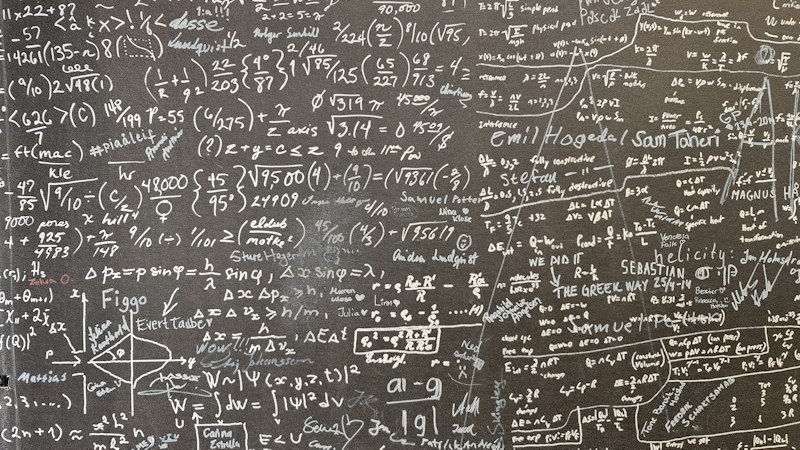
People have been chasing pi for thousands of years. Ancient Babylonians and Egyptians found early approximations; Archimedes trapped its value between the perimeters of polygons.
Today, pi turns up in waves, probability, physics, and places where no circle is immediately in sight. We can calculate trillions of its digits, yet a handful is enough for most everyday calculations.
A DATE TO CELEBRATE → MARCH 14 · 3/14Some things are worth going on about.
3.141592653589793238462643383279…